Parallel vs Tapered Threads
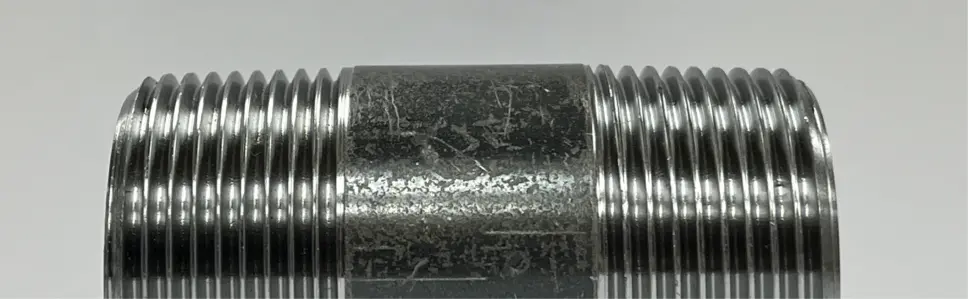
What is a Tapered Thread?

A diagram demonstrating the characteristics of a tapered thread
Tapered Threads
- Gradually decrease in diameter along their length, forming a subtle cone shape.
- As the male and female threads are tightened together, the taper causes the threads to wedge against one another.
- The seal is created through thread compression.
Common Uses
- Widely used across the UK.
- Particularly suited to gas and high-pressure systems.
- Ideal where a strong, pressure-tight connection is required.
Sealing Method
- PTFE Tape or Sealants
- Thread Compression
Limitations & Compatibility
- Not ideal for systems requiring frequent disassembly.
- Repeated tightening can damage threads and reduce sealing performance.
- BSPT and NPT threads are not compatible.
Our malleable iron fittings are a good example of taper/taper threaded connections, where both male and female threads are tapered to create a tight mechanical seal as they’re engaged.
What is a Parallel Thread?

A diagram demonstrating the characteristics of a parallel thread
Parallel Threads
Parallel threads maintain a constant diameter along their length and do not create a seal through thread compression. Instead, they rely on a separate sealing element such as a washer, O-ring, gasket, or thread sealant to achieve a leak-tight joint.
In practice, parallel female threads are most commonly paired with a tapered male thread. This combination allows the fitting to be tightened and correctly aligned, while the seal is formed by the sealing element rather than the threads themselves. This makes installation more controlled and repeatable compared to taper/taper connections.
Our BS EN 10242 mild steel fittings are a good example of this widely used taper male/parallel female configuration, commonly found across industrial and mechanical pipe systems.
Common Uses
Parallel thread connections are ideal for applications where fittings may need to be adjusted, repositioned, or regularly disassembled. They are widely used in hydraulic, industrial, and maintenance-heavy environments where consistent sealing and ease of installation are important.
Sealing Method
A reliable seal is achieved using PTFE tape, liquid thread sealants, or mechanical sealing elements such as washers, O-rings, or gaskets, depending on the application and fitting type.
Limitations & Compatibility
Parallel threads will not seal on their own and must always be used with an appropriate sealing method. Without this, they are more prone to leakage compared to tapered thread connections.
Can Parallel and Tapered threads be used together?

A diagram showing compatibility between Tapered & Parallel threads
Mismatched Threads
- In some cases they may screw together, but mismatched thread types often prevent proper alignment and reduce sealing effectiveness.
- Forcing incompatible threads together will damage threads.
- Using compatible threads is essential to avoid leaks and damage.
Sealants

Various Sealants which help to seal and fasten threads together
Improve sealing performance
- Sealants help fill small gaps and imperfections between threads, creating a more reliable, leak-tight joint.
Reduce friction during tightening
- Materials such as PTFE tape or thread compound allow threads to engage more smoothly and reduce the risk of galling.
- Thread condition also plays an important role in how well fittings screw together. Debris, minor damage, or imperfections on the threads can increase friction and make assembly more difficult. Using a suitable thread-sealing material helps the threads engage more smoothly while improving the overall seal.
Common questions
How many times do I wrap PTFE tape?
- Wrap the tape around the thread 2-4 times in a clockwise direction.
- Using too little tape can cause it to unravel and break apart.
- Using too much tape can prevent fittings from tightening properly and, in some cases, may even damage the fitting.
Will PTFE tape leak?
- PTFE tape itself does not leak, but incorrect application or incompatible threads can cause the joint to leak.
Which thread should I use?
- Use tapered threads for permanent, pressure-tight connections such as gas systems, and parallel threads for low pressure systems which may need to be dismantled and reused.
Get started in seconds!
Save your details, view past orders, and enjoy a faster checkout every time.