What Are Press Fittings & How Are They Used?
Getting Started with Press-Fit Tools
Are press-fittings the future?
What are press-fittings and why have they become such a popular choice for pipe installation?
If you’ve spent years perfecting a clean soldered joint, it’s understandable to look at press-fit with a raised eyebrow.
Some installers prefer not to use press-fittings, as other pipe installation methods continue to perform reliably. They also argue that press-fittings have not been around long enough to be fully proven as a trustworthy long-term sealing solution capable of matching the full lifespan of a pipeline.
For some installers, methods like soldering require skill, something you take pride in. Then a tool comes along that promises to do the job in half the time for half the effort, and it can feel a bit like cheating, often fuelling further debate. But it’s not always a blown-out-of-proportion argument between skill and practicality.
Most installers simply use multiple methods, putting stubbornness aside and recognising that each job requires its own approach while understanding the benefits of each method. Many who use more than one method see press-fittings not as cheating, but as another option that is quick, clean, and reliable.
Why are press-fittings growing in popularity?
Press-fittings aren’t a new technology, even if it’s only recently become mainstream. The earliest press-fit technology appeared back in the late 1950s thanks to engineer Gunnar Larsson, before Viega later patented the concept in the 1960s. Since then, manufacturers like Geberit, Sanha, and Conex Bänninger have pushed the technology forward, turning it into one of the fastest growing systems in plumbing and industrial pipework. Wherever you stand on the subject, our press-fit series will break things down in a practical, no‑nonsense way.
What are press-fittings and how do they work?
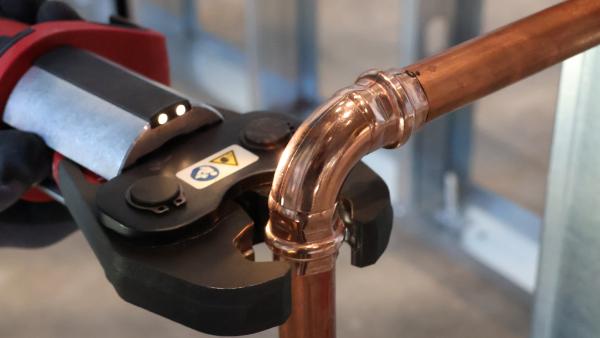
Press-fittings are a flame free alternative to welding and soldering. Jaws/slings are used to clamp the ends of the fitting by compressing the O-ring with a precise amount of force to create a seal around the pipe. They rely on the use of a press tool with an electric motor putting out a hydraulic force ranging from 15kn – 60kn depending on the size and purpose of the tool.
The use of a jaw or sling will depend on the size of the fitting. Slings are more often used for large fittings beginning at around 42mm.
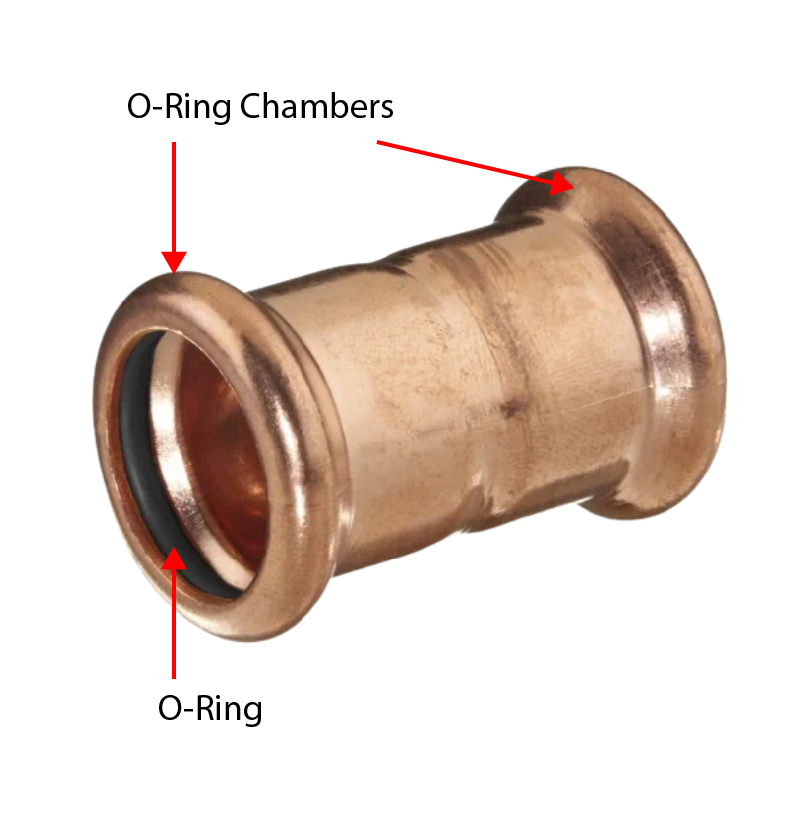
The O-rings, which sit inside the O-ring chambers and are the vital component for creating the seal. They can also be swapped out based upon user preference with material choices including EPM, HNBR, FKM or Aflas (FEPM), but each fitting will always include the correct O-ring for its intended purpose.
What pipe should be used with press-fittings?
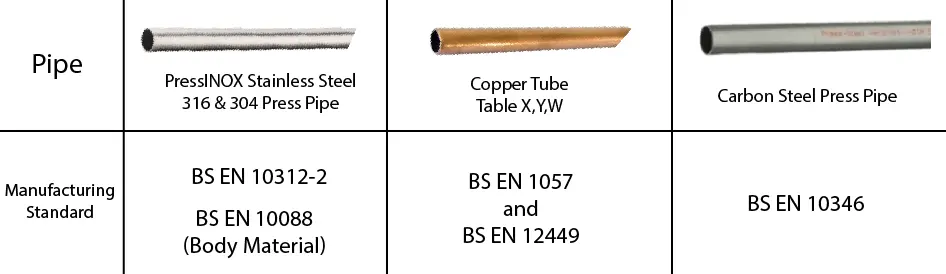
Not any old piece of pipe will be suitable for use with press-fittings. This is because press pipe is designed to be the correct diameter, wall thickness and tolerance. If the pipe is not built to the right specifications, you will run the risk of not creating an effective seal. For example, you should not attempt to use BS EN 10255 steel pipe with press-fittings.
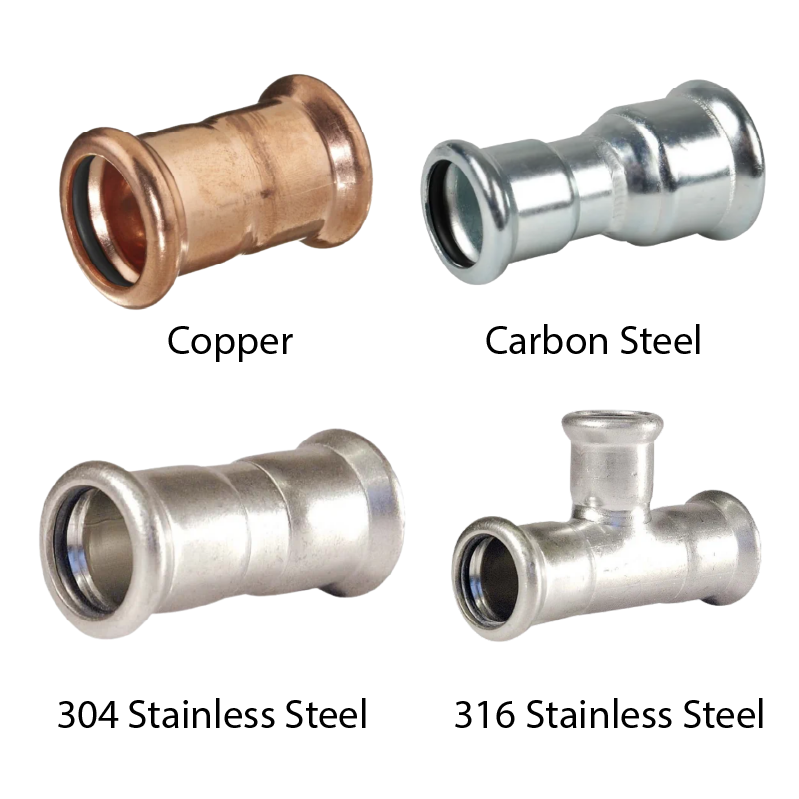
Common pipes used with press-fit are thin walled stainless steel 316 or 304, carbon steel or copper.
Press-fitting profiles and jaws
What are press profiles and do they matter that much?
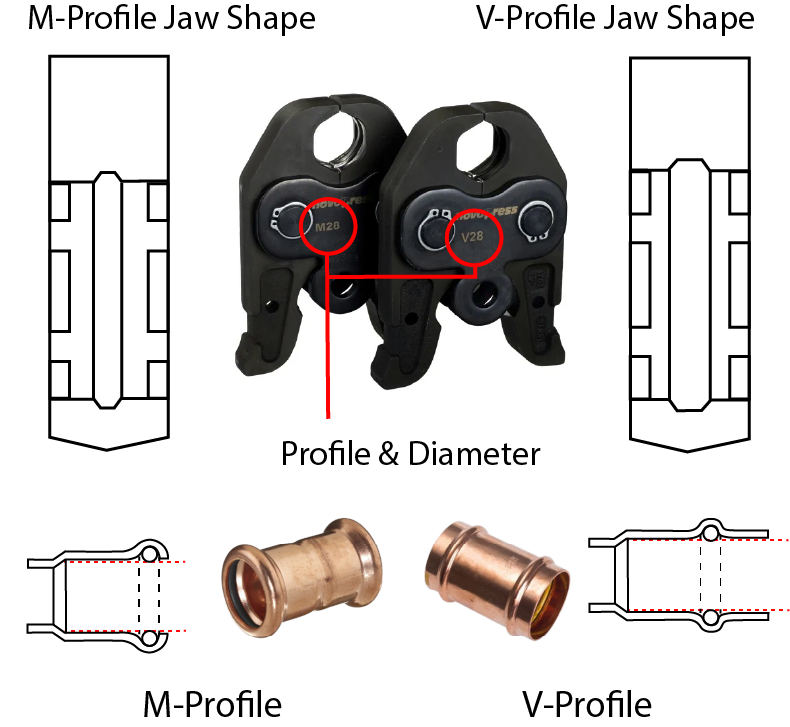
The short answer is yes, if you use the wrong profile, you’ll damage the fitting and potentially the jaws & tool. Jaws and slings are designed to match the specific profile of the press-fittings they are intended for.
Why are there different press-fitting profiles?
This is mostly due to different manufacturers developing their own patents for press-fit, however, they essentially all do the same thing. The most common profiles are M & V used for copper, stainless steel, and carbon steel usually found in HVAC systems.
How do I tell the difference?
At a glance, there’s not always and obvious difference. But you can always check the label on the jaw/sling as it will reveal its profile and the diameter of the fitting it is for. M & V profiles are visually very similar in their shape and design and therefor easy to mix up with one another. However, other jaw profiles will have different shaped grooves on the inner jaw, specifically designed for use with the intended fitting profile.
Mixing profiles will crush your fittings! Other profiles include VSH, U, TH, G, and H.
Where are press-fittings used?
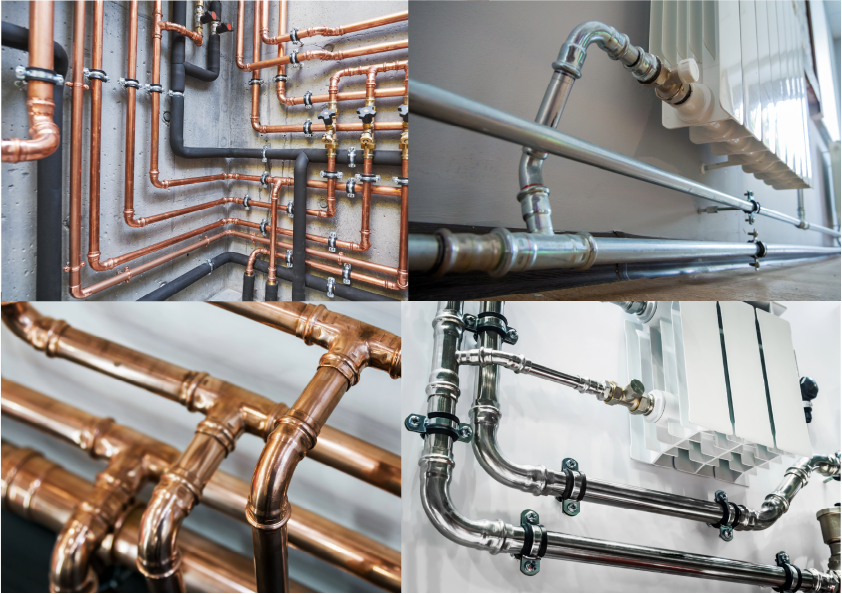
As a plumber, you’ll probably already know the answer, having installed press-fittings on countless projects. For those who are new to press-fit systems, their versatility is one of their greatest advantages. Press-fittings can be found in domestic properties connected to boilers and heating systems, carrying water and gas throughout schools, offices, and public buildings.
They are also widely used in industrial environments, where they help transport chemicals, steam, and other process media safely and efficiently. Local breweries, farms, and manufacturing facilities are also likely to rely on press-fit systems as part of their daily operations.
Beyond traditional plumbing applications, press-fittings are commonly used in HVAC and compressed air systems, as well as a variety of water services including purified water, potable water, chilled water, and boosted cold-water systems.
They are suitable for flammable gases and can be found in plant rooms, food processing facilities, hospitals, and many other commercial environments where reliability and installation speed are important. Press-fit technology is also widely used for steam condensate systems, making it a flexible solution across a broad range of industries and applications.
You’ll notice them everywhere once you start to look.
What materials are available for press-fittings?
Press-fittings are available in a range of materials, including plastic (PEX), brass (DZR), copper, stainless steel, and carbon steel. Selecting the right material depends on several factors, such as budget, corrosion resistance, the medium being transported through the pipeline, the operating pressure and temperature of the system.
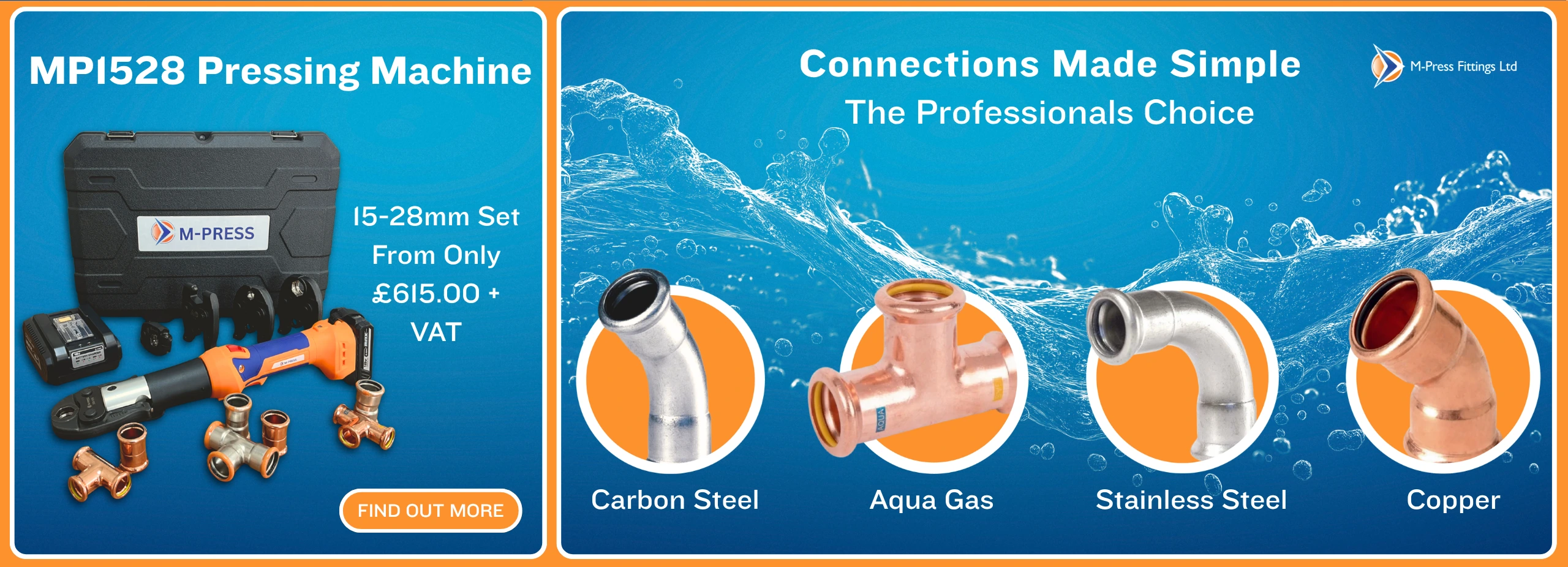
Copper press-fittings are a popular choice due to their durability, reliability, and ease of installation. They are widely used in plumbing, heating, and gas applications, with copper Aqua Gas fittings offering the added benefit of being suitable for both water and gas systems. This versatility can simplify installations and reduce the number of fitting types required on a project.
Stainless steel press-fittings are often selected where enhanced corrosion resistance is needed. They are available in grades 304 and 316, with the key difference being the addition of molybdenum in 316 stainless steel. This improves resistance to corrosion and makes it particularly suitable for more demanding environments. Grade 304 is commonly chosen for general-purpose applications where exposure to corrosive substances is limited, while grade 316 is preferred when greater protection against corrosion is required.
Carbon steel press-fittings provide a strong and cost-effective solution for many installations. They offer excellent mechanical strength and are often selected where durability is important but the higher corrosion resistance of stainless steel is not necessary. This makes carbon steel an economical option for a variety of applications while still delivering long-term performance.
Final thoughts on press fittings
Press tools are available in various shapes and sizes depending on their intended use. Typically, more powerful tools will output a greater force and are designed for larger press-fittings, increasing the press strength from the hydraulic pistons.
It’s worth considering what size press-fittings you will be installing before you purchase your tool and jaws.
With that in mind, press-fit is the simplest and most efficient option. The addition of the O-ring allows for rapid installation and leak checks without the mess from flux and solder drips or the need for a hot works permit.
Explore our range of press fittings, tools and pipe and if you want to know more you can get in touch with us over the phone, by email or even visit our trade counter.
Get started in seconds!
Save your details, view past orders, and enjoy a faster checkout every time.